Published in The Lancet · November 2026
Sexual violence against girls cut by more than half. Costs reduced from $120 to $6 a family.
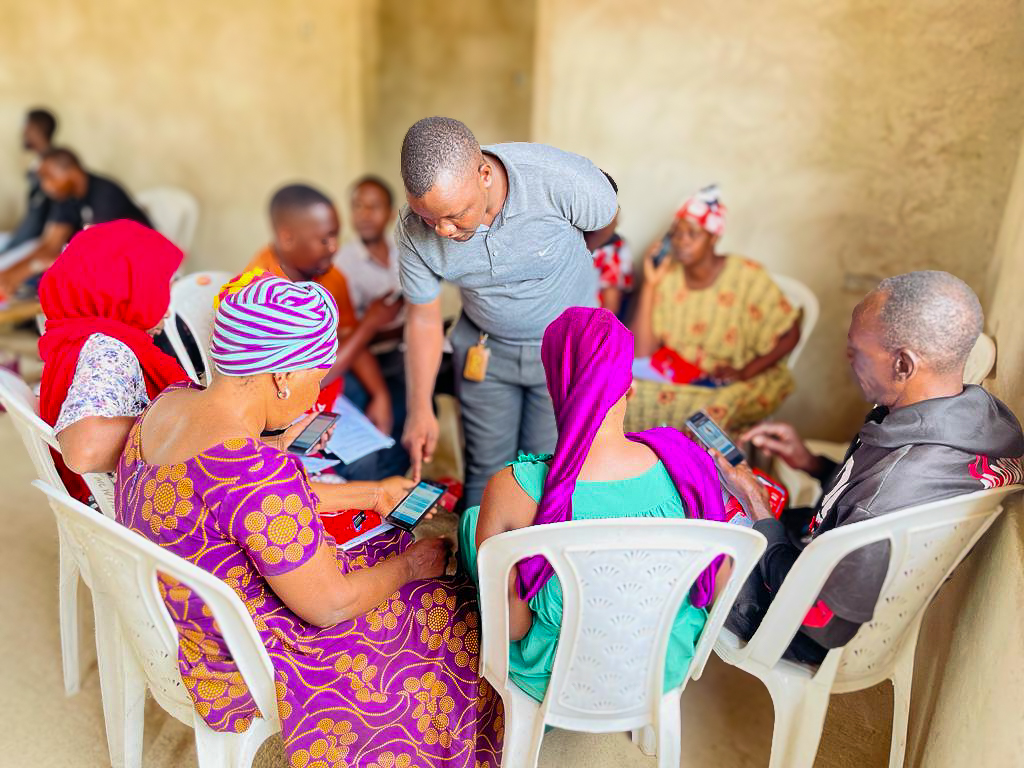
A University of Oxford-led trial in Tanzania found that ParentApp, a blended digital parenting program from Parenting for Lifelong Health, reduced sexual violence against adolescent girls by 67%. Results like this, at this cost, rest on a new way of building digital programs, developed by IDEMS.
THE EVIDENCE,
PUBLISHED IN THE LANCET
A cluster-randomized controlled trial with 2,396 adolescents aged 10–17 and their caregivers, across 80 urban and rural communities in Tanzania. Results at 14-month follow-up.
67%
reduction in past-year sexual violence against girls
54%
reduction in past-month sexual exploitation of girls
51%
increase in positive parent–child relationships reported by girls
$6
per family at scale, compared with $120 for in-person delivery
$16
in health service savings for every $1 invested
76%
of families completed every module; 92% stayed with the study
ParentApp also reduced physical and emotional maltreatment and improved parenting, mental health, family communication and financial coping.
Source: The Lancet
Why this is remarkable
The program evolves with the evidence. The app adapts to engage local parents.
Transitioning a proven offline parenting program to digital delivery should make it far cheaper and easier to reach every family. The catch: a digital program has to be adapted again and again to local realities, so that the technology helps parents engage with the program instead of getting in the way. With conventional apps, the iterative process of getting the digital details right means rebuilding the app from the ground up, sometimes more than once.
IDEMS built ParentApp to solve exactly this. The evidence-based program is held separately from everything that shapes local engagement. So as the team learned what worked for Tanzanian families, the app could be redesigned again and again, without rebuilding it and without touching the program.
The result: three in four families completed all twelve modules, at a twentieth of the cost of in-person delivery, with local facilitators supporting parents in WhatsApp groups.
The technology behind the results
An app built to keep changing, without breaking the program.
IDEMS mathematical scientists built ParentApp on new structured-data foundations. Here’s what that separation looks like
A Conventional App
Program + content + design + functionality
one fixed codebase
ParentApp, Built by IDEMS
Language & Content
Design
Functionality
Media & Reminders
held variably by local researchers, NGO and facilitators
Layered on top, changed independently
Evidence-based parenting program
held by PLH and researchers – evolves with the evidence
“
We began with the assumption we were turning an offline program into a simple digital app. But as we learned how much contexts vary, and how many different people hold knowledge the program depends on, we realized the technology to hold that complexity didn’t exist. So we built it.
– Dr David Stern
Director, IDEMS
Innovation Lead, Parenting Programs
What it made possible in Tanzania
Impact, evidence of impact, a reusable infrastructure asset

An app that kept up with families
The local app was continuously and substantially improved as local researchers and NGO partners learned what families needed – all without touching the core program.
A fair test,
at low cost
The comparison app, WASHApp, on safe water and hygiene, was built on the same engagement architecture foundations with the program swapped out, giving researchers a closely matched, low-cost control that didn’t require building a second app from scratch.
Infrastructure
Tanzania can reuse
Tanzanian partners now hold a foundation already shown to engage local families. It can carry evolving parenting programs and, in the future, entirely new expert-developed programs.
For governments
Built for ownership, not dependency
A national ParentApp adaptation currently requires IDEMS support to get started with our prototype technology. Once launched, a digital program can transition to ownership by the country delivering it.
National sovereignty
Country-level teams own the content, the app and its release history. The code is open source, and local teams choose where the app is hosted and own and control local data.
Made for low-resource settings
Works offline on Android, iPhone and the web. Family data stays on the phone, reminders run without a connection, and large media downloads are optional.
Adaptable by local teams
Program staff can change the app themselves, working in spreadsheets rather than code, without skilled developer support
Reusable infrastructure
The same foundation can carry future versions of the program, and other proven programs, without starting again.
South Africa, Tanzania, Malaysia, Mexico, Chile and Panama are exploring next steps to take ParentApp to scale, with support from Parenting for Lifelong Health.
Talk to Parenting for Lifelong Health ↗What comes next
What worked in Tanzania is a prototype
Behind the scenes of the trial, IDEMS mathematicians did the work of structuring and adapting the program by hand. That’s why it worked, and also why it can’t yet reach every community that needs it.
AI has only recently become capable enough to change that. We are turning those mathematical foundations into tools any local team can use, so that a ministry, an NGO or even a grassroots community organization could build its own high-quality version of the proven program.
Impact Brain
Expert knowledge, held securely
Proven programs stored as structured, verifiable knowledge that experts keep improving.
AI Hands
Narrow, auditable AI assistants
Each assistant has one clear job: it surfaces the information and choices, and people make the decisions. Nothing unpredictable in a program where children’s safety is at stake.
Impact Weaver
Local versions that stay connected
A community’s version isn’t a one-off copy. It keeps improving as the expert program improves, and what works locally can be shared with similar communities.
An alternative AI future: Small, resource-light AI that runs on existing local servers with local data. No dependence on costly, distant data centers, and no extracting communities’ data.
For researchers: We approach this as building a knowledge commons (Hess & Ostrom, 2007). The expertise held by researchers, governments, local organizations and families is combined, with ownership, governance and privacy built in from the start.
For media
Press resources
Interviews are available with the research team and with IDEMS on the technology behind ParentApp.
The research
The Lancet: A blended digital parenting intervention for the prevention of sexual violence, exploitative sex and maltreatment of adolescent children at scale in Tanzania ↗ Social Science & Medicine: Cost-effectiveness of a digital parenting intervention in Tanzania ↗ University of Oxford news ↗ Trial registration ↗Contacts
On the technology: Kate Fleming, Director, IDEMS
[email protected]
On the study: Rachel Fisher, DSPI, University of Oxford
[email protected]
Global media: Azadeh Ansari, Global Parenting Initiative,
[email protected]
The trial was led by the University of Oxford, the University of Cape Town, Tanzania’s National Institute for Medical Research and Parenting for Lifelong Health, in partnership with Tanzania’s Ministry of Community Development, Gender, Women and Special Groups, UNICEF and WHO country offices in Tanzania and South Africa, and Vodacom Tanzania. ParentApp adapts the WHO- and UNICEF-supported Parenting for Lifelong Health for Teens program, with sexual abuse prevention content from No Means No Worldwide and the Brave Movement. Its technology was developed by IDEMS.